
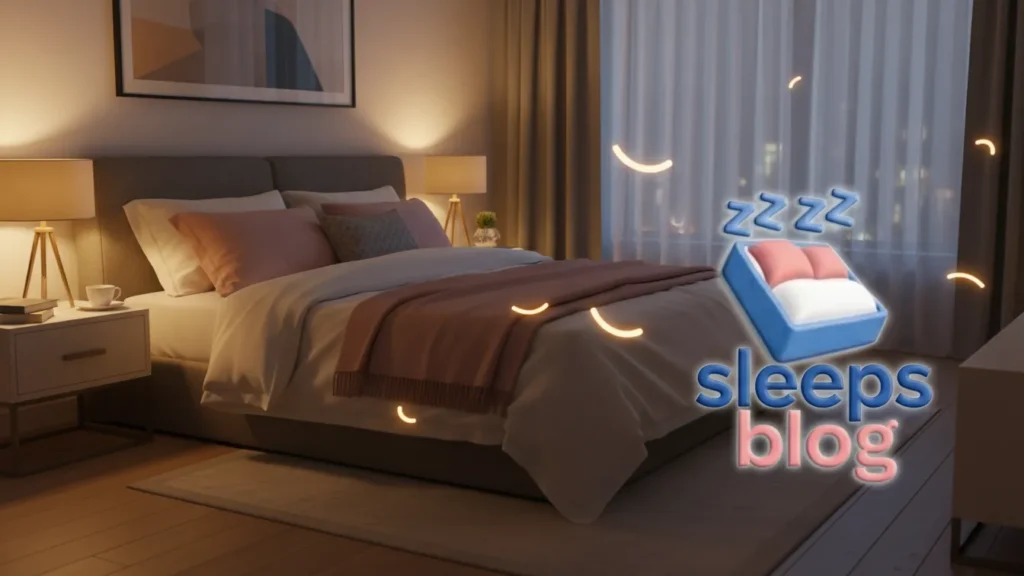
Why Light Color Matters at Night
The color of light you’re exposed to at night plays a meaningful role in how prepared your body feels for sleep. While brightness often gets most of the attention, light color is just as important, especially in the hours leading up to bedtime. Different light colors send different signals to the brain, influencing alertness, relaxation, and overall sleep readiness.
As evening approaches, the body naturally expects light to become softer and warmer. This gradual shift helps signal that the active part of the day is ending. When nighttime light closely resembles daylight in color, the body may remain in a more alert state, even if you feel physically tired. Over time, this mismatch can make it harder to wind down consistently.
Light color matters because it affects how the brain interprets time of day. Cooler-toned light tends to feel more stimulating and “day-like,” while warmer-toned light is often perceived as calmer and more suitable for evening environments. These perceptions aren’t just psychological—they influence how relaxed or alert you feel at night.
Many adults overlook light color because indoor lighting often feels neutral or familiar. However, exposure to the wrong type of light at night can quietly delay sleep onset, make evenings feel less restful, or contribute to lighter sleep. These effects may not be obvious after a single night, but they can build gradually with repeated exposure.
Another reason light color matters is consistency. When evenings are filled with mixed lighting—bright, cool light one night and softer, warm light the next—the body receives inconsistent cues. This can weaken the internal signals that help regulate sleep timing.
Understanding why light color matters at night sets the foundation for making practical lighting choices later. By aligning evening light with the body’s natural expectations, it becomes easier to support smoother transitions into sleep and more predictable rest over time.

What Blue Light Is and Where It Comes From
Blue light is a specific portion of the visible light spectrum characterized by its shorter wavelength and higher energy. It’s naturally present in daylight and plays an important role in helping the body feel alert, focused, and awake during the day. In the right context—especially in the morning and early afternoon—blue light can be beneficial.
The most powerful natural source of blue light is sunlight. Outdoor daylight contains a strong amount of blue light, which helps signal to the body that it’s daytime. This signal supports alertness, concentration, and the regulation of the body’s internal timing system.
At night, however, most blue light exposure comes from artificial sources. Common examples include:
- Smartphones and tablets
- Computer and laptop screens
- Televisions
- LED and fluorescent indoor lighting
These sources often emit blue-rich light regardless of the time of day. Because they’re used at close range and for extended periods, their impact can be stronger than many people realize—especially in the evening.
Modern lighting has increased blue light exposure at night compared to previous generations. Traditional light sources, such as candles or incandescent bulbs, produced warmer-toned light with very little blue content. In contrast, many energy-efficient bulbs and digital screens emit cooler, blue-heavy light by default.
Another important factor is duration. Blue light exposure at night often isn’t brief. Scrolling, streaming, or working on devices can extend exposure well into the hours when the body expects darkness. This repeated pattern can gradually shift how the body responds to nighttime cues.
Understanding what blue light is and where it comes from helps explain why it has become such a focus in sleep discussions. Blue light itself isn’t the problem—it’s the timing and context of exposure that matter most, especially during the evening hours when the body is preparing for rest.
What Warm Light Is and How It Differs From Blue Light
Warm light refers to light that appears softer, more amber, or yellow in tone. It has a longer wavelength and lower energy compared to blue light, which is why it tends to feel calmer and less stimulating—especially in the evening. Warm light is closer to the natural light conditions humans historically experienced after sunset.
Common sources of warm light include:
- Incandescent bulbs
- Candlelight and firelight
- Lamps with warm-colored bulbs
- Some LED bulbs designed specifically for evening use
Unlike blue-rich light, warm light contains less of the wavelengths associated with alertness. As a result, it’s often perceived as more relaxing and better suited for nighttime environments. This doesn’t mean warm light makes you sleepy on its own, but it generally interferes less with the body’s natural transition toward rest.
One key difference between warm light and blue light is how the body interprets them in terms of time of day. Blue light closely resembles daylight and tends to signal “daytime” to the brain. Warm light, on the other hand, more closely resembles sunset or evening conditions, which the body associates with winding down.
Warm light also tends to feel less harsh on the eyes at night. Softer tones reduce visual contrast and brightness, which can make evening environments feel calmer even when lights are still on. This can support a more gradual shift from active tasks to relaxation.
Another important distinction is context. Warm light is commonly used indirectly—through table lamps, floor lamps, or diffused lighting—rather than overhead fixtures. This indirect exposure further reduces its stimulating effect compared to direct, bright sources of blue-rich light.
Understanding what warm light is and how it differs from blue light helps clarify why lighting choices matter in the evening. While both types of light allow visibility, they don’t send the same signals to the body. Choosing warmer tones at night helps align indoor lighting with the body’s natural expectations as bedtime approaches.
👉Light Exposure and Sleep Quality
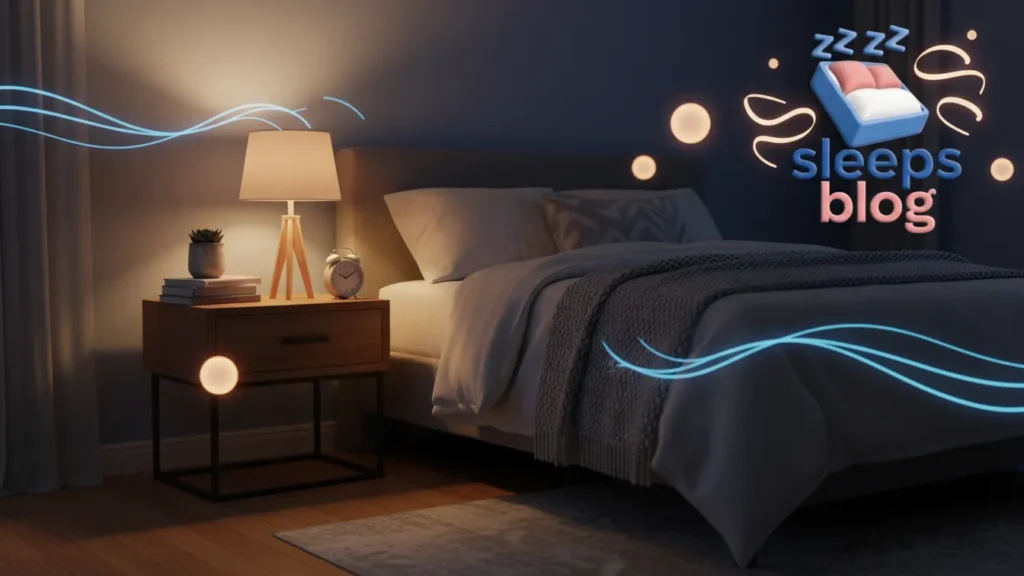
How Blue Light Affects the Body at Night
At night, blue light has a different effect on the body than it does during the day. While daytime exposure can support alertness and focus, evening blue light tends to signal “daytime” to the brain, making it harder for the body to shift into a restful state.
As night approaches, the body naturally prepares for sleep by reducing alertness and increasing relaxation. Blue-rich light can interfere with this transition by maintaining a level of stimulation that the body doesn’t expect in the evening. This doesn’t necessarily feel like being “wired,” but it can delay the feeling of natural sleepiness.
One common effect of evening blue light exposure is delayed sleep timing. People may notice that they feel tired, yet not ready to fall asleep at their usual bedtime. Over time, repeated exposure can gradually push bedtime later, even when wake-up times stay the same.
Blue light can also influence sleep depth and continuity. Some adults fall asleep without difficulty after evening screen use but experience lighter sleep, more frequent awakenings, or less refreshing rest. These effects may not be dramatic from one night to the next, but they can accumulate with regular exposure.
Another factor is sensitivity. Not everyone responds to blue light in the same way. Some people notice immediate effects, while others experience subtler changes that only become noticeable after weeks of consistent nighttime exposure. Age, daily light exposure, and overall routine can all influence how strongly blue light affects the body.
It’s important to emphasize that blue light itself isn’t harmful. The issue is timing and duration, not the presence of blue light alone. When blue-rich light dominates evenings—especially close to bedtime—it can work against the body’s natural cues for rest.
Understanding how blue light affects the body at night helps explain why managing light color is an important part of a sleep-supportive environment. Reducing blue light exposure in the evening doesn’t require eliminating technology, but it does involve being intentional about how and when it’s used.
👉Best Bedroom Temperature for Sleep
How Warm Light Supports Evening Relaxation
Warm light tends to support evening relaxation by aligning more closely with the body’s natural expectations as night approaches. Unlike blue-rich light, which can feel stimulating, warm-toned light creates an environment that feels calmer and less demanding on the senses. This difference can make evenings feel more settled and prepare the body for rest.
As daylight fades, the body naturally begins to shift out of high-alert mode. Warm light helps reinforce this transition by providing enough illumination for comfort and safety without signaling that it’s still daytime. This subtle cue can make it easier to unwind mentally and physically, even if you’re still engaged in quiet activities.
Warm light also influences emotional tone. Softer, amber-colored lighting often makes spaces feel cozier and more inviting, which can reduce the sense of urgency or stimulation that brighter, cooler light sometimes creates. This calmer atmosphere may support relaxation routines such as reading, stretching, or preparing for bed.
Another benefit of warm light is that it’s often used more indirectly. Table lamps, floor lamps, and shaded fixtures spread light gently throughout the room rather than shining directly into the eyes. This indirect exposure further reduces stimulation and helps the environment feel more restful.
Warm light doesn’t force sleepiness, and it won’t override stress or irregular schedules on its own. However, it can remove barriers that make relaxation harder. By reducing unnecessary stimulation, warm light allows natural sleepiness to emerge more smoothly when the body is ready.
Consistency also matters. When evenings are consistently lit with warmer tones, the body learns to associate that lighting with winding down. Over time, this association can make the transition from daytime activity to nighttime rest feel more predictable.
Understanding how warm light supports evening relaxation helps explain why changing light color—without changing routines—can still improve how evenings feel. It’s a simple environmental adjustment that works with the body’s natural rhythms rather than against them.
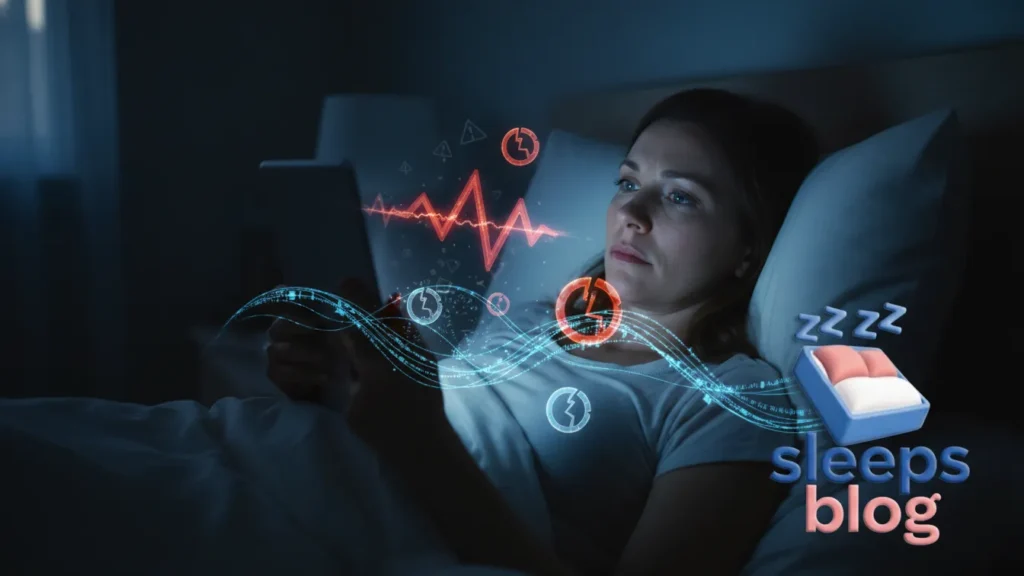
Blue Light, Warm Light, and Sleep Timing
Light color in the evening can influence when you feel ready to sleep, not just how relaxed you feel. Blue light and warm light tend to push sleep timing in different directions, which is why they’re often discussed in relation to bedtime and sleep schedules.
Blue-rich light in the evening can delay sleep timing by signaling alertness when the body expects cues for rest. Even if you maintain a consistent bedtime, exposure to blue light late at night may make it harder to feel sleepy at that time. Over repeated nights, this can gradually shift sleep later, especially for people who already lean toward later schedules.
Warm light, in contrast, is less likely to push sleep timing later. By resembling the softer light of sunset, it supports the body’s natural expectation that nighttime is approaching. This doesn’t mean warm light automatically makes you sleepy, but it tends to get out of the way, allowing natural sleepiness to develop without interference.
Timing effects are often subtle. Many adults don’t notice an immediate change after one evening of blue or warm light exposure. Instead, the impact shows up as patterns: later bedtimes over weeks, difficulty feeling sleepy at the usual hour, or a growing mismatch between bedtime and actual sleep onset.
Consistency amplifies these effects. Regular exposure to blue light late in the evening can reinforce later sleep timing, while consistently warmer evening lighting can help stabilize when sleepiness returns night after night. This is why light color choices matter most when they’re repeated.
It’s also important to consider morning consequences. When sleep timing shifts later due to evening blue light, waking up at a fixed time may feel harder. Over time, this can contribute to shorter sleep or increased reliance on alarms and stimulants.
Understanding how blue light and warm light influence sleep timing helps explain why managing evening light isn’t just about comfort—it’s about alignment. By choosing lighting that supports natural timing cues, many adults find it easier to maintain a sleep schedule that feels stable and sustainable.
👉Best Sleep Schedule for Adults
Indoor Lighting Choices: Blue vs Warm Light
Indoor lighting choices in the evening can quietly shape how alert or relaxed you feel as bedtime approaches. Even when light exposure seems moderate, the type of light used indoors—blue-toned versus warm-toned—can influence how easily the body transitions toward sleep.
Blue-toned indoor lighting is common in modern homes. Many LED bulbs, overhead fixtures, and task lights are designed to mimic daylight, which makes them useful during the day. At night, however, this same quality can keep the environment feeling active and stimulating. Rooms lit primarily with cool, blue-rich light may feel functional but not restful, even when brightness is reduced.
Warm-toned lighting creates a different atmosphere. Lamps and bulbs with warmer color temperatures tend to soften the environment, making spaces feel calmer and more suitable for evening activities. This type of lighting supports a clearer contrast between daytime and nighttime, which can help the body recognize that it’s time to slow down.
Another important factor is how light is distributed indoors. Blue-rich lighting is often concentrated in overhead fixtures that illuminate the entire room evenly. Warm lighting is more commonly used in localized sources, such as table lamps or floor lamps, which create pockets of light without flooding the space. This difference can affect how stimulating the room feels overall.
Many adults benefit from layered lighting in the evening. Using brighter, cooler light earlier in the evening for tasks, then transitioning to warmer, softer lighting later, allows the environment to change gradually. This approach supports relaxation without sacrificing visibility or comfort.
It’s also worth noting that lighting choices don’t have to be perfect to be effective. Even small shifts—such as switching off overhead lights and relying on lamps—can noticeably change how a room feels at night.
Understanding indoor lighting choices helps explain why some evenings feel naturally calming while others feel restless, even with similar routines. By favoring warm light over blue light at night, many adults find it easier to create an environment that supports relaxation and smoother transitions into sleep.
Screens, Light Color, and Evening Use
Screens are one of the most common sources of blue light exposure at night, largely because they combine blue-rich light, close proximity, and prolonged use. Phones, tablets, computers, and televisions are often used during the very hours when the body expects light levels—and stimulation—to decrease.
One reason screens have such a strong impact is distance. Screens are typically viewed at close range, which increases the intensity of light reaching the eyes compared to room lighting. Even when brightness is lowered, blue-toned light viewed up close can feel more stimulating than warmer, indirect lighting across a room.
Another factor is duration. Evening screen use often extends longer than intended—scrolling, streaming, or browsing can easily push light exposure closer to bedtime. This prolonged exposure can delay the body’s natural shift toward sleep, even if the content itself feels relaxing.
Screen light also tends to be consistent in color. Unlike indoor lighting that can be adjusted or dimmed gradually, screens often maintain a blue-heavy tone unless settings are changed. This lack of transition can make it harder for the body to recognize that nighttime is approaching.
That said, not all screen use affects everyone the same way. Some adults notice immediate difficulty falling asleep after evening screen use, while others experience subtler effects such as lighter sleep or later bedtimes over time. The absence of obvious short-term effects doesn’t mean sleep isn’t being influenced.
Context matters as well. Passive screen use, such as watching a calm show from a distance, may feel less disruptive than interactive use like scrolling on a phone. The combination of light color, proximity, and mental engagement determines how stimulating screen use feels overall.
Understanding how screens and light color interact helps explain why managing evening light isn’t just about turning devices off. Being mindful of how screens are used—when, how long, and in what lighting context—can make evening routines feel calmer and support smoother transitions into sleep.
Humanize 335 words
Common Myths About Blue Light and Sleep
Blue light is often discussed in oversimplified ways, which has led to several common myths about how it affects sleep. These misunderstandings can make evening light management feel more complicated—or more extreme—than it needs to be.
One widespread myth is that blue light is always bad for sleep. In reality, blue light plays an important role during the day by supporting alertness and focus. The issue isn’t blue light itself, but exposure at the wrong time, particularly late in the evening when the body expects signals for rest.
Another common belief is that one night of blue light exposure ruins sleep. While some people are very sensitive, for most adults the effects are gradual. Sleep timing and quality are usually influenced by repeated patterns over time, not a single evening of screen use or bright lighting.
Many people also assume that brightness matters more than light color. While brightness is important, color plays a distinct role. A moderately bright warm light may be less disruptive at night than a dim but blue-rich light viewed up close. Focusing only on dimming lights without considering color can limit results.
There’s also a myth that using filters or night modes completely solves the problem. These tools can reduce blue light exposure, but they don’t eliminate stimulation from screens altogether. Duration, proximity, and mental engagement still matter, even when color is adjusted.
Another misconception is that avoiding blue light means sitting in darkness. Effective light management is about balance, not deprivation. Warm, low-intensity lighting can provide comfort and visibility without significantly interfering with sleep readiness.
Understanding these myths helps shift the focus from fear-based rules to practical awareness. Managing blue light doesn’t require perfection or extreme restrictions. It’s about aligning evening light exposure with the body’s natural expectations, using informed choices rather than rigid assumptions.

How to Transition From Blue Light to Warm Light at Night
Transitioning from blue light to warm light in the evening doesn’t require drastic changes or strict rules. The most effective approach is gradual adjustment, allowing the environment to shift in a way that feels natural and sustainable rather than abrupt or restrictive.
One helpful strategy is changing lighting in stages. Earlier in the evening, brighter or cooler lighting may still be useful for tasks and activities. As bedtime approaches, switching to warmer, softer light helps signal that the day is winding down. This gradual transition supports the body’s natural shift toward relaxation.
Replacing overhead lighting with lamps and indirect light sources is another practical step. Overhead fixtures often emit cooler light and illuminate the entire room, which can feel stimulating at night. Using table lamps or floor lamps with warm-toned bulbs creates a calmer atmosphere without reducing visibility too much.
Screens can be included in this transition as well. Many adults find it helpful to:
- Reduce screen use closer to bedtime
- Increase distance from screens when possible
- Use screens in rooms with warm ambient lighting rather than darkness
These adjustments don’t eliminate blue light exposure, but they reduce its impact and make the overall environment feel less stimulating.
Consistency matters more than perfection. Making the same small lighting changes most nights helps the body learn what to expect. Over time, this predictability can make evenings feel smoother and reduce the effort needed to wind down.
It’s also important to keep transitions realistic. The goal isn’t to avoid blue light entirely, but to shift the balance toward warmer light as night approaches. Even partial changes—such as dimming lights earlier or switching bulbs in frequently used lamps—can support better alignment.
Understanding how to transition from blue light to warm light helps turn awareness into action. By adjusting lighting gradually and intentionally, many adults find it easier to create evenings that feel calmer and more supportive of natural sleep readiness.
Common Lighting Mistakes in the Evening
Many evening lighting issues don’t come from extreme habits, but from small, routine mistakes that gradually interfere with the body’s ability to wind down. Because these habits feel normal and familiar, they’re often overlooked—even when sleep quality starts to suffer.
One common mistake is leaving bright overhead lights on until bedtime. Overhead fixtures tend to illuminate the entire room and often emit cooler-toned light. Keeping them on late into the evening can make the environment feel active and daytime-like, even if you’re engaging in relaxing activities.
Another frequent issue is mixing light types without intention. For example, using warm lamps while also scrolling on a bright phone or working under cool LED lighting sends conflicting signals. This inconsistency can confuse the body, making it harder to fully relax even when tired.
Many adults also underestimate the impact of late-night “just a few minutes” of screen use. Brief exposure may not feel disruptive, but when it happens every night, it can slowly push sleep timing later. The cumulative effect is often more important than any single evening.
Poor light placement is another overlooked factor. Lighting that shines directly into the eyes—such as uncovered bulbs or bright desk lamps—can feel more stimulating than indirect lighting, even at lower brightness levels. Eye-level exposure tends to have a stronger alerting effect at night.
Ignoring daytime light exposure can also worsen evening sensitivity. Spending most of the day indoors under dim light can make the body more reactive to evening lighting. Without strong daytime signals, even moderate blue light at night may feel more disruptive.
Finally, relying on a single fix—such as warm bulbs or night modes—while keeping other habits unchanged can limit results. Effective evening lighting usually involves a combination of timing, color, placement, and consistency.
Recognizing these common mistakes helps shift the focus from strict rules to smarter habits. By removing small sources of unnecessary stimulation, evenings can feel calmer and better aligned with the body’s natural transition toward sleep.
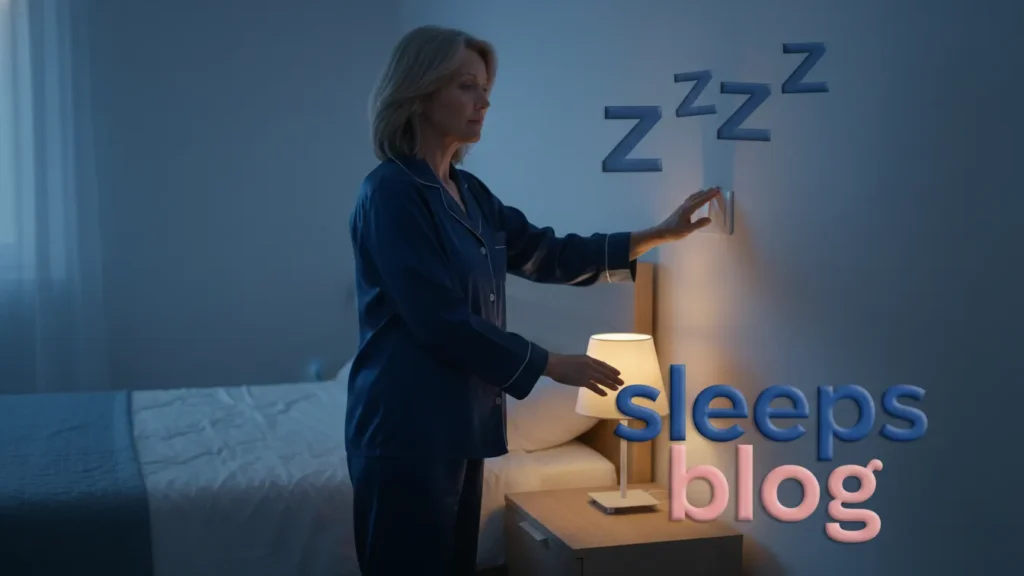
How to Choose the Right Light Color for Better Sleep
Choosing the right light color at night isn’t about finding a single “perfect” option—it’s about alignment. The goal is to support the body’s natural transition from daytime alertness to nighttime rest by selecting lighting that feels appropriate for the evening hours.
A helpful starting point is to notice how different light colors make you feel at night. If a room feels energizing or makes it harder to relax, the light may be too blue-toned for that time of day. Lighting that feels calm, soft, and less demanding on the eyes is often better suited for evening use.
For most adults, warmer light works better after sunset. It allows visibility without strongly signaling alertness, helping the body wind down more naturally. This doesn’t mean every light must be extremely dim or amber—balance matters. The right choice is one that supports comfort without stimulating wakefulness.
Context is important. Activities like reading, relaxing, or preparing for bed generally pair well with warm, indirect lighting. Tasks that require focus can still be done under slightly brighter light earlier in the evening, as long as there’s a clear transition toward warmer tones as bedtime approaches.
Consistency also plays a key role. Using similar light colors each evening helps the body learn what to expect. When light color changes randomly from night to night, it becomes harder for the body to associate evening environments with rest.
Personal sensitivity should guide final decisions. Some people are more affected by blue light than others, and preferences can vary based on age, routine, and daily light exposure. Paying attention to how sleep timing and quality respond to lighting changes is often more useful than following rigid rules.
Ultimately, choosing the right light color for better sleep is about reducing friction. When evening light supports relaxation instead of stimulation, sleepiness can emerge more smoothly. Over time, this alignment can make nights feel calmer and sleep feel more consistent—without drastic changes or strict limitations.