
Why Light Exposure Matters for Sleep Quality
Light exposure is one of the strongest environmental signals influencing how well you sleep. Even when routines are consistent and the bedroom feels comfortable, light—especially its timing and intensity—can quietly shape sleep quality in powerful ways. This is because light helps regulate the body’s internal sense of day and night.
As evening approaches, the body naturally prepares for rest by shifting into a lower-alertness state. Reduced light supports this transition, making it easier to feel sleepy and relaxed. When light exposure remains high late into the evening, the body may interpret this as a signal to stay awake, delaying sleep onset and reducing overall sleep depth.
Light doesn’t just affect falling asleep—it also influences sleep continuity. Exposure to light at the wrong times can make sleep lighter and more fragmented, increasing the likelihood of nighttime awakenings or early morning waking. These disruptions may be subtle, but over time they can reduce how restorative sleep feels.
Morning light plays the opposite role. Exposure to natural light earlier in the day helps signal that it’s time to be alert, supporting a more stable sleep-wake pattern later on. When light exposure is misaligned—too little during the day and too much at night—the body’s sense of timing can become blurred.
Many adults underestimate light because its effects aren’t always immediate. Instead of clearly preventing sleep, light may gradually shift bedtime later, make sleep feel less predictable, or reduce morning alertness. This makes it easy to overlook as a contributing factor to sleep problems.
Importantly, light exposure doesn’t act alone. It interacts with other aspects of the sleep environment, such as temperature, routine, and daily habits. When light exposure supports the body’s natural rhythm, sleep often feels smoother and more consistent.
Understanding why light exposure matters is the foundation for making practical adjustments later. By becoming aware of how light shapes sleep quality, it becomes easier to create an environment that supports deeper, more reliable rest over time.
How Light Affects the Body’s Sleep-Wake Cycle
Light plays a central role in regulating the body’s sleep-wake cycle, the internal system that helps determine when you feel alert and when you feel ready for sleep. This cycle depends less on the clock and more on environmental signals—light being the most influential one.
When light enters the eyes, it sends signals to the brain that help determine whether it’s time to be awake or to wind down. Bright light, especially during the day, supports alertness and focus. As light levels drop in the evening, the body begins shifting toward a state that supports rest. This gradual change helps prepare the body for sleep.
The timing of light exposure is just as important as its intensity. Morning light helps reinforce the start of the day, supporting a stable rhythm that makes it easier to feel sleepy at night. In contrast, light exposure late in the evening can confuse this system, signaling to the brain that it’s still daytime even when the body should be preparing for sleep.
Light also influences how consistent the sleep-wake cycle feels from day to day. Irregular exposure—such as dim days spent indoors followed by bright nights filled with screens—can weaken the body’s sense of timing. Over time, this may lead to later bedtimes, lighter sleep, or difficulty waking up feeling refreshed.
Another important factor is duration. Extended exposure to bright light at night tends to have a stronger impact than brief exposure. Even if you feel tired, prolonged evening light can delay the body’s natural transition into sleep.
Importantly, sensitivity to light varies among adults. Some people notice immediate effects from evening light, while others experience more gradual changes over time. Age, routine, and daily habits all influence how light affects the sleep-wake cycle.
Understanding how light shapes this cycle helps explain why sleep quality often improves when light exposure is better aligned with natural day-night patterns. Supporting the body’s timing system doesn’t require extreme changes—small, consistent adjustments to when and how you’re exposed to light can make a meaningful difference over time.
👉 Best Bedroom Temperature for Sleep
Natural Light vs Artificial Light: Key Differences
Not all light affects sleep in the same way. Natural light and artificial light send different signals to the body, and understanding these differences helps explain why spending time outdoors during the day often improves sleep, while bright indoor light at night can disrupt it.
Natural light changes gradually throughout the day. Morning light tends to be brighter and richer in wavelengths that promote alertness, while evening light naturally softens as the sun sets. These gradual shifts help the body track time and support a stable sleep-wake rhythm without conscious effort.
Artificial light, by contrast, is often static and poorly timed. Indoor lighting typically stays at similar brightness levels regardless of the time of day. In the evening, this can interfere with the body’s natural transition toward sleep by signaling continued daytime conditions.
Another key difference is intensity. Natural daylight is much brighter than most indoor lighting, even on cloudy days. This strong daytime signal helps anchor the body’s sense of morning and daytime alertness. When adults spend most of the day indoors under relatively dim light, the contrast between day and night becomes weaker, making evening light more disruptive.
Artificial light also tends to be closer to the eyes. Lamps, overhead lights, and screens are often used at close range, increasing their impact on the brain’s perception of light exposure. Even moderate brightness can feel more stimulating at night when the body expects darkness.
Importantly, artificial light isn’t inherently bad. It’s essential for modern life. The issue is timing and balance. When artificial light dominates evenings and natural light is limited during the day, the body’s internal timing cues can become blurred.
Many adults find that increasing exposure to natural light earlier in the day while softening artificial light at night helps restore contrast between day and night. This clearer distinction supports smoother transitions into sleep and more consistent sleep quality over time.
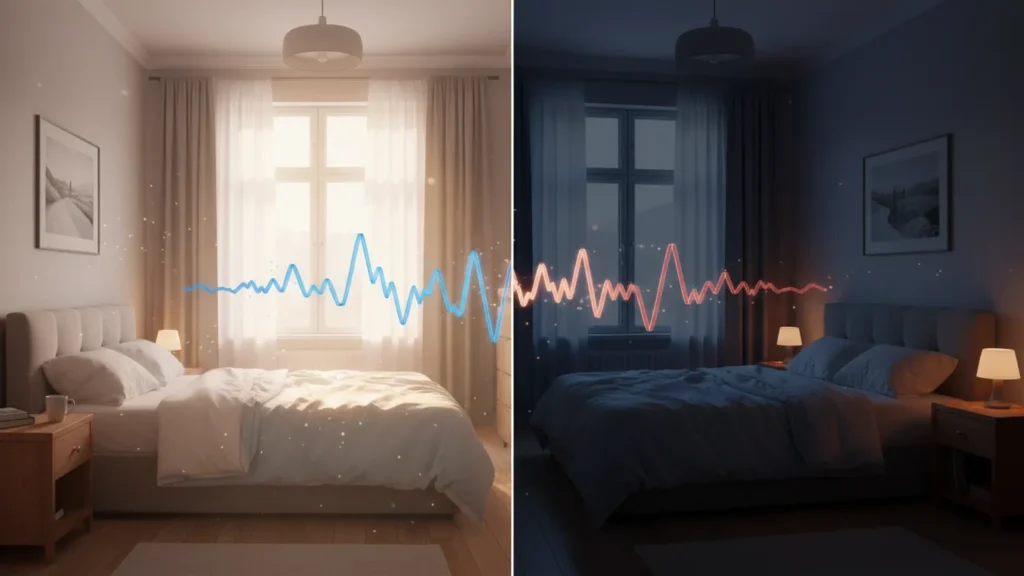
The Role of Morning Light in Better Sleep
Morning light plays a critical role in setting up better sleep later that night. Exposure to light early in the day helps the body clearly identify when the day starts, which strengthens the internal timing system that governs alertness and sleepiness across the full 24-hour cycle.
When your eyes are exposed to light in the morning, the brain receives a strong signal that it’s time to be awake. This signal helps shift the body into a more alert state and sets the timing for when sleepiness should return in the evening. In simple terms, earlier light exposure during the day often leads to earlier, more natural sleepiness at night.
Natural daylight is especially effective. Even on overcast days, outdoor light is typically much brighter than indoor lighting. Spending time near a window or going outside shortly after waking can help reinforce a stable sleep-wake rhythm, particularly for adults who struggle with late bedtimes or inconsistent sleep schedules.
Lack of morning light can have the opposite effect. When days begin in dim environments—such as waking up in low light and spending most of the morning indoors—the body may not receive a clear “start of day” signal. This can delay internal timing, making it harder to feel sleepy at night and easier for sleep to drift later over time.
Morning light also supports sleep consistency. Regular exposure at similar times each day helps the body maintain predictable rhythms, even when evenings aren’t perfect. This is one reason consistent wake-up times and morning light often work together to improve sleep quality.
Importantly, morning light doesn’t need to be extreme. You don’t need direct sunlight or long exposure. Small, consistent habits—like opening curtains right after waking or spending a few minutes outdoors—may be enough to support better alignment.
Understanding the role of morning light helps explain why sleep improvements often start with daytime changes rather than nighttime restrictions. By strengthening the body’s daytime signals, evening wind-down and nighttime sleep can begin to feel more natural and reliable over time.
👉 Best Sleep Schedule for Adults
Why Evening Light Can Delay Sleep
Evening light has a powerful influence on how easily the body transitions into sleep. As night approaches, the body expects light levels to drop, signaling that it’s time to slow down and prepare for rest. When this expectation isn’t met, sleep may be delayed—even if you feel physically tired.
Exposure to bright light in the evening can send a mixed signal to the brain, suggesting that it’s still daytime. This can push natural sleepiness later, making it harder to fall asleep at your intended bedtime. The effect doesn’t require extremely bright light; consistent exposure to moderate lighting can be enough to shift timing over time.
Evening light also affects sleep readiness, not just sleep onset. When light levels stay high late into the night, the body may remain in a more alert state. This can lead to feeling tired but mentally active, a common experience for adults who struggle to “switch off” at night.
Artificial lighting tends to amplify this effect because it often stays constant regardless of the time. Overhead lights, lamps, and screens can keep the environment brighter than what the body expects in the evening. Without a gradual dimming period, the transition into sleep can feel abrupt or incomplete.
Another issue is timing consistency. If evenings vary widely—some nights brightly lit and active, others dim and calm—the body receives inconsistent cues. Over time, this can make sleep timing less predictable, contributing to later bedtimes and lighter sleep.
It’s important to note that reducing evening light doesn’t mean sitting in darkness. The goal is relative contrast—allowing evenings to feel noticeably dimmer than daytime. This shift helps the body recognize that nighttime is approaching.
Understanding why evening light delays sleep helps explain why bedtime routines alone aren’t always enough. When light exposure aligns with the natural rhythm of the day, the body often responds by becoming sleepy more smoothly and at a more consistent time.
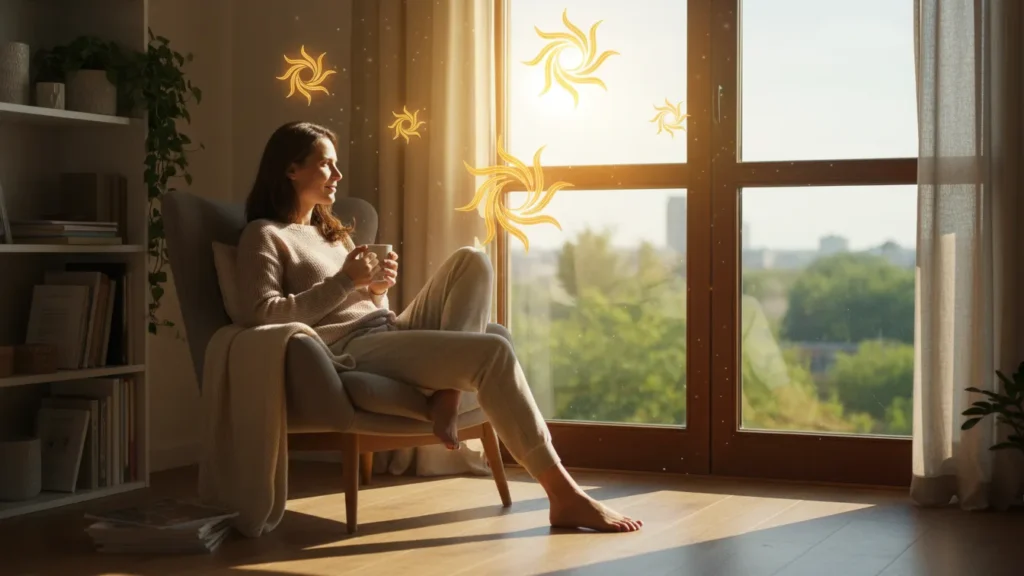
Blue Light and Its Impact on Sleep Quality
Blue light has received a lot of attention in conversations about sleep, and for good reason. This type of light is particularly effective at signaling alertness to the brain, which makes it helpful during the day—but potentially disruptive at night.
Blue light is present in many common sources, including LED lighting, smartphones, tablets, computers, and televisions. During daytime hours, exposure to blue-rich light supports focus and wakefulness. In the evening, however, this same signal can delay the body’s transition into sleep mode.
One reason blue light stands out is its timing sensitivity. The body’s sleep system becomes more responsive to light as night approaches. Exposure to blue light in the late evening can shift sleep timing later, making it harder to feel sleepy at the intended bedtime. This doesn’t always happen immediately; for many adults, the effect builds gradually over days or weeks.
Blue light may also affect sleep depth and continuity. Even if you fall asleep after evening screen use, sleep can feel lighter or more fragmented. Some people notice increased nighttime awakenings or less refreshing sleep the following morning.
It’s important to keep perspective. Blue light is not inherently harmful, and avoiding it completely is unrealistic in modern life. The issue is intensity, duration, and timing. Brief exposure earlier in the evening may have little impact, while prolonged exposure close to bedtime is more likely to interfere with sleep quality.
Individual sensitivity varies. Some adults notice clear effects from evening screen use, while others are less affected in the short term. However, even when immediate effects aren’t obvious, consistent late-night exposure can still influence sleep timing over time.
Understanding how blue light affects sleep quality helps explain why managing light exposure is about balance rather than elimination. By being mindful of when and how blue light is used in the evening, many adults find it easier to support smoother sleep onset and more stable sleep quality over time.
Indoor Lighting Choices That Support Sleep
The type of lighting you use indoors—especially in the evening—can strongly influence how prepared your body feels for sleep. Even when overall light exposure is reduced, lighting choices such as brightness, placement, and color tone can either support or disrupt the transition into rest.
One important factor is light intensity. Bright overhead lights tend to keep the environment feeling active and daytime-like. In the evening, this can make it harder for the body to shift into a relaxed state. Softer, lower-intensity lighting helps signal that the day is winding down, even if you’re still awake and active.
Light placement also matters. Lighting that comes from above or directly at eye level can feel more stimulating than light placed lower in the room. Lamps positioned below eye level—such as table lamps or floor lamps—often feel calmer and less intrusive, supporting a more relaxed evening atmosphere.
Color temperature plays a role as well. Cooler-toned lighting tends to feel more alerting, while warmer tones are often perceived as calmer. Many adults find that warmer indoor lighting in the evening helps create a clearer contrast between daytime and nighttime, making it easier to feel sleepy later on.
Consistency is another key element. Using similar lighting patterns each evening—gradually dimming lights or switching to softer sources—helps reinforce predictable cues for the body. Inconsistent lighting, such as alternating between very bright and very dim evenings, can blur these signals.
Importantly, supportive lighting doesn’t mean sacrificing functionality. It’s about matching light to the time of day. Brighter, cooler lighting may be useful earlier in the evening, while softer, warmer light can support the transition toward sleep as bedtime approaches.
By making intentional indoor lighting choices, many adults find they can improve sleep readiness without drastic changes to routine. Small adjustments in brightness, placement, and tone often create an environment that feels calmer and more aligned with the body’s natural rhythm as night approaches.
Screen Use at Night and Sleep Disruption
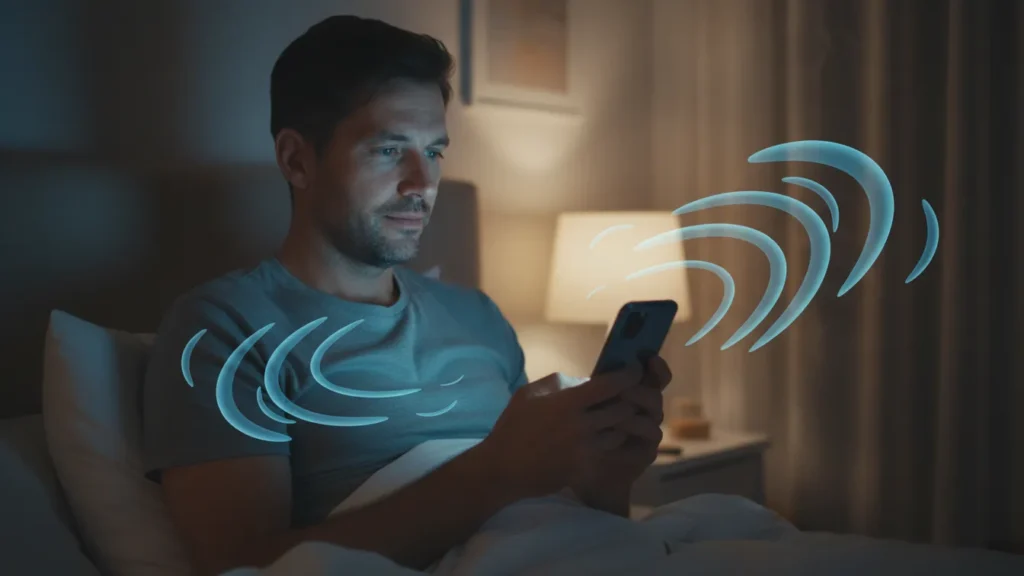
Screen use at night is one of the most common sources of disruptive light exposure in modern sleep environments. Phones, tablets, computers, and televisions emit light directly toward the eyes, often at close range, which can make their impact stronger than other indoor lighting—especially in the hours before bed.
One reason screens are disruptive is duration. Evening screen use often lasts longer than intended, extending light exposure well into the time when the body expects darkness. This prolonged exposure can delay the natural rise of sleepiness, making bedtime drift later even when you feel physically tired.
Screens also tend to combine light with mental stimulation. Reading messages, watching videos, or scrolling through content can keep the brain engaged at a time when it should be winding down. This combination of visual light input and cognitive activity can make it harder to transition into sleep smoothly.
Another issue is proximity. Holding a phone close to the face or sitting near a bright screen increases the intensity of light reaching the eyes. Even moderate brightness can feel stimulating when used up close in a darkened room, especially compared to softer, indirect lighting.
Importantly, not all screen use affects everyone the same way. Some adults notice immediate difficulty falling asleep after screen use, while others experience more subtle effects, such as lighter sleep or delayed bedtimes over time. The absence of obvious short-term effects doesn’t necessarily mean sleep quality isn’t being influenced.
Screen habits also tend to be inconsistent. Some nights may be screen-heavy, others more relaxed. This variability can make it harder for the body to develop predictable evening cues, contributing to irregular sleep timing.
Understanding how screen use at night disrupts sleep helps clarify why light management isn’t just about room lighting. Screens are often the brightest and most stimulating light source in the evening. Becoming more aware of when and how screens are used at night is an important step toward creating a sleep environment that supports smoother transitions into rest.
👉 Nighttime Routines That Support Better Sleep
Light Exposure, Sleep Consistency, and Routine
Light exposure doesn’t just influence individual nights of sleep—it plays a major role in how consistent your sleep feels across days and weeks. When light patterns are predictable, the body learns what to expect. When they vary widely, sleep timing and quality often become less stable.
Consistency matters because the body relies on repeated signals to regulate its internal rhythm. Getting bright light at similar times each morning and dimmer light in the evening helps reinforce a reliable sleep-wake pattern. When these signals happen irregularly—bright nights followed by dark mornings, or dim days followed by bright evenings—the body’s sense of timing can weaken.
Many adults experience this without realizing it. For example, spending most weekdays indoors under low light, then staying up late with bright screens on weekends, creates conflicting cues. Over time, this can lead to drifting bedtimes, variable sleep onset, and difficulty waking up feeling rested.
Light routines don’t need to be rigid to be effective. What matters most is overall direction and regularity. When light exposure generally follows a similar pattern each day—brighter earlier, dimmer later—the body is better able to anticipate sleep. This often makes bedtime feel more natural and mornings less abrupt.
Inconsistent light exposure can also make recovery harder. After a poor night of sleep, the body benefits from clear daytime signals to re-anchor its rhythm. Without adequate daytime light or with excessive evening light, it may take longer to regain balance.
Importantly, light consistency supports other sleep habits. Stable routines around meals, activity, and bedtime tend to work better when light exposure aligns with them. Light acts as a background cue that either reinforces or undermines these behaviors.
Understanding the connection between light exposure and sleep consistency helps explain why sleep may feel unpredictable even when routines seem mostly in place. By aligning light exposure with daily rhythms, many adults find it easier to maintain steady sleep patterns over time.
How to Reduce Harmful Light Exposure Without Avoiding Screens
Reducing the impact of light on sleep doesn’t require eliminating screens or drastically changing modern habits. For many adults, the most effective approach is modifying how and when light is used, rather than trying to avoid it altogether.
One helpful strategy is adjusting timing. Using screens earlier in the evening and gradually reducing exposure as bedtime approaches can make a noticeable difference. Even shifting screen use 30–60 minutes earlier may help the body begin its natural wind-down process.
Another option is managing brightness. Lowering screen brightness in the evening, especially in darker rooms, can reduce how stimulating light feels. Bright screens in a dim environment tend to have a stronger impact than the same screens used in well-lit spaces.
Screen distance also matters. Holding devices farther from the face or choosing larger screens positioned farther away—such as watching television instead of scrolling on a phone—may reduce the intensity of light reaching the eyes. This doesn’t remove exposure, but it can make it less disruptive.
Many adults also find it useful to pair screen use with calming context. Watching low-stimulation content, avoiding emotionally charged material, or keeping screen use passive rather than interactive can support smoother transitions into sleep.
Consistency is key. Sporadically avoiding screens while frequently using them late into the night sends mixed signals to the body. A predictable pattern—screens earlier, dimmer light later—helps reinforce clearer cues over time.
Importantly, reducing harmful light exposure is about supporting sleep readiness, not achieving perfection. Even partial changes can reduce strain on the sleep-wake system. By working with screens instead of against them, many adults are able to improve sleep quality without giving up technology entirely.
👉 Why Sleep Quality Matters More Than Sleep Quantity
Common Light-Related Mistakes That Affect Sleep
Many sleep issues connected to light aren’t caused by extreme habits, but by small, repeated mistakes that quietly interfere with the body’s natural timing. These behaviors often feel harmless because they’re common and socially accepted, yet over time they can reduce sleep quality and consistency.
One frequent mistake is treating all evening light the same. Using bright overhead lights late at night keeps the environment feeling active, even when you’re trying to relax. Without a gradual shift toward dimmer lighting, the body may not receive a clear signal that nighttime has begun.
Another issue is inconsistent light routines. Bright evenings followed by dark mornings, or dim days followed by screen-heavy nights, send mixed messages to the sleep-wake system. This inconsistency makes it harder for the body to predict when to wind down and when to be alert.
Many adults also underestimate screen proximity. Holding phones or tablets close to the face increases the impact of light exposure, especially in darker rooms. Even when brightness seems low, close-range screens can feel more stimulating than expected.
Ignoring daytime light exposure is another common oversight. Spending most of the day indoors under low light can weaken the contrast between day and night, making evening light more disruptive. Without strong daytime signals, the body becomes more sensitive to light later on.
Finally, some people rely on a single solution—such as night mode or blue light filters—while leaving other light habits unchanged. These tools can help, but they work best when combined with broader changes in timing and environment.
Recognizing these common light-related mistakes helps shift the focus from eliminating light to using it more intentionally. By adjusting a few everyday habits, many adults can create clearer day-night signals that support more consistent and restful sleep.
How to Tell If Light Exposure Is Affecting Your Sleep
Light exposure affects sleep in gradual and often subtle ways, which can make it difficult to recognize when it’s part of the problem. Rather than causing obvious sleepless nights right away, misaligned light exposure often shows up as patterns—small shifts in sleep timing, consistency, or how restorative sleep feels over time.
One sign is difficulty feeling sleepy at night, even when you’re physically tired. If bedtime keeps drifting later or sleepiness feels delayed without a clear reason, evening light exposure may be contributing. This is especially relevant if nights involve bright rooms or extended screen use.
Another indicator is lighter or more fragmented sleep. Waking up during the night, feeling restless, or noticing early-morning awakenings can sometimes be linked to light exposure that interferes with the body’s natural sleep depth. These disruptions don’t always feel dramatic, but they can reduce how refreshed you feel in the morning.
Morning alertness provides useful clues as well. If waking up feels consistently difficult or groggy—particularly after evenings with higher light exposure—it may suggest that the sleep-wake cycle is being pushed later than intended.
Pay attention to consistency across days. When light exposure varies widely—bright late nights mixed with dim mornings—sleep often becomes less predictable. If sleep quality improves during periods of more regular light patterns, that contrast can be informative.
Importantly, light-related sleep issues are rarely about a single habit. They tend to reflect the overall balance and timing of light across the day. Small changes may not produce immediate results, but gradual improvements in sleep timing or stability often signal that light exposure is better aligned.
Rather than trying to eliminate light entirely, the goal is awareness. If adjusting light exposure leads to smoother evenings, steadier sleep, or easier mornings, it’s a strong sign that light was playing a role. Recognizing these signals helps guide practical, sustainable changes that support better sleep quality over time.